Wednesday, March 10, 2021

Happy St. Patricks Day!

Happy St. Patrick Day! 

   Saint Patrick Day is just around the corner, will you be wearing green?


    Irish folklore tales tell of wearing green to ward off leprechauns, who would pinch everyone in sight. Next week, countries all over the world will turn green on March 17th to celebrate their Irish heritage and remember Saint Patrick, who helped bring Christianity to Ireland in the fifth century. In America, the celebration traditionally involves large parties, food, Irish drinks, and of course- lots of green and four-leaf clovers. 

 Thinking of grabbing an Irish Beer or Whiskey to celebrate? St. Patrick's Day celebrations are known for their alcohol-infused festivities, with beer and spirit sales skyrocketing each holiday. While St. Paddy’s Day is one of America’s favorite holidays, it has sadly become one of the deadliest, with a spike in drunk driving and alcohol-related crashes. In 2018, 73 people lost their lives on Saint Patrick's day, with drunk driving accidents to blame. According to the National Highway Traffic Safety Administration (NHTSA), 38 percent of drivers killed in St. Patrick’s Day accidents had a blood-alcohol level over .08 (the legal limit). This statistic is drastically higher, considering alcohol is typically to blame for 7 percent of all crashes. The risk of being a victim of a drunk driving collision is significantly higher on March 17th in comparison to most days. 


    Preventing impaired driving is of utmost importance, as it significantly affects all parties involved. Choosing to drink and drive puts yourself and others at great risk for injury, receiving a DUI, or death. In the state of Washington, a DUI is defined as operating a motor vehicle with a Blood- Alcohol level of 0.08 or greater, a THC concentration of 5 nanograms or more per milliliter of blood, or under the influence of any other substance. The consequences of a DUI range greatly but can include large fines, license suspensions, and jail time. 

    The risk is simply not worth it, don’t rely on luck to get you home this St. Patrick's Day. If you plan on drinking or using any other controlling substance, never drive. 


With that in mind, here are some important tips to ensure you and your loved ones stay safe on St. Patrick’s Day:

-Plan ahead and designate a sober driver before heading out

-Call a sober friend, Uber, Taxi, or other ride-sharing services 

-Stay the night at a friend’s house or hotel

-Check out AAA and NHTSA for a list of free sober ride programs in your area


If you plan on driving sober, be on the lookout for drunk drivers. If you suspect someone of drunk driving, report it to the police immediately, but do not follow or approach the car. It is important to call law enforcement and get a good description of the vehicle without getting too close to the vehicle. 


Even the luck of the Irish can’t save you from a DUI or worse if you drink and drive. Remember to drive sober this holiday. Have a fun and safe St. Patrick's Day!


Wednesday, December 30, 2020

Happy New Years from the PRTPO

 Happy New Year from the Palouse Regional Transportation Planning Organization to you! We hope you have enjoyed the past year with us and have been driving safely the entire time. We thought it would be a good idea to share a few more tips before the year slips on by. 


Avoid Drinking and Drinking

We all know New Year's Eve is one of the most common times of the year to find drunk drivers on the road but we wanted to remind you of the staggering statistics. Did you know every day almost 30 people die in drunk driving accidents? The one person every 50 minutes. 10,000 lives every year. At a 0.02 BAC users can experience a decline in visual functions (rapid tracking of a moving target), a decline in the ability to perform two tasks at the same time (divided attention). At 0.05 BAC users experience reduced coordination, reduced ability to track moving objects, difficulty steering, reduced response to emergency driving situations. 0.08 BAC is the legal limit in all 50 states. 

Ensure Your Safety

You can never predict what the other drivers on the road's actions are going to be, thus driving defensively is always the best option. This ensures that you are looking out for yourself, and if everyone does this the roads should be safe. Some methods of driving defensively include keeping your distance. On New Year's Eve, we recommend keeping extra distance between cars to stay cautious.If you are being driven by someone always make sure they are sober. Don't assume other drivers are going to do the correct action, always look out for yourself. Cut out distractions when driving. Distracted driving can lead to you not keeping up with your defensive driving techniques and lead to a crash.


Other Options

Finding yourself out for New Years' and needing a ride home but being drink is a problem, but not a problem without a good solution! We wanted to provide all you answer to the question of how do I get home if I got drunk somewhere. There are always ride-sharing apps/services in your area to look into! Check into your community to see what they offer. Calling someone for a ride is always an option. Never be embarrassed to admit you are responsible enough to not drive drunk. If you know you're going to be getting drunk you can always plan ahead and get a ride, or have someone be the designated sober driver. Drinking and driving should never be the option.


Happy New Year, stay safe, and to another year of safe driving!


Thursday, December 24, 2020

Christmas Driver Safety

Merry Christmas from the Palouse Regional Transportation Planning Organization to your families! We hope this 2020 holiday season is treating you all well. We wanted to share some Christmas Holiday Driving tips with some of you folks in the spirit of giving! 

Give yourself a little bit of extra time

Whether you're headed out for last-minute Christmas shopping or just home from work always make sure to give yourself a little bit of extra time. The roads are always prone to being slippery and getting home an extra 2 minutes early isn't worth the risk. You will also feel more relaxed knowing you have extra time just in case. When drivers are relaxed they're much less likely to make anxious mistakes that may lead up to a crash. 


Use extra care when watching other vehicles

Defensive driving is always the go-to option throughout the year, but especially during the holiday season. During the holiday season, there is always an increase in the number of drivers under the influence found on the road, unfortunately. This is why paying extra attention and giving other drivers even more room is extra important around the holiday season. If you suspect someone of drunk driving please report them to the local authorities as they are a danger for everyone and themselves.


Avoid Distractions when Driving
Driving while distracted is incredibly dangerous but easy to forget about. At a speed of 55 mph sending a text means you miss an entire football field worth of length on the road. That puts you and others at serious danger. There are three main types of distractions when driving. 
  • Visual: taking your eyes off the road
  • Manual: taking your hands off the wheel
  • Cognitive: taking your mind off driving
In 2018 alone, over 2,800 people were killed and an estimated 400,000 were injured in crashes involving a distracted driver. Young adults and teens account for the highest number of distracted drivers. Remember to stay safe this holiday by reducing the distractions in your own car, and if you see your driver being distracted say something. 

Holiday Weather Driving
We've all heard those horrid holiday weather stories. The "we got into an accident driving back from grandma" stories. Here are some tips to help you avoid those situations when driving this holiday season.
  1. Look ahead at least 15 seconds in traffic to see where you’ll be and anticipate what you might need to do to manage that situation.
  2. You should take the time to adjust your following distance and look for the safest position in traffic 
  3. You should create a cushion of space around your vehicle, you can give yourself an “out” when an unsafe situation arises
While drivers can be an issue sometimes nature itself seems to be fighting you as well. Luckily we have also gathered some winter driving tips for the road as well!
  1. When driving in poor conditions, accelerate and decelerate slowly
  2. Apply the gas slowly to regain traction and avoid skids
  3. Don't stop if you can avoid it
  4. Don't power up hills
  5. Don't stop going up hills
  6. Check the weather along your route and when possible, delay your trip if bad weather is expected.
  7. Before hitting the road, notify others and let them know your route, destination, and estimated time of arrival


Tuesday, July 28, 2020

Traveling During Covid-19


With summer in full swing, people are hitting the road and still traveling. How can you get out of the house and travel safe during Covid-19? The safest thing to do is to put travel plans on hold. However, for those people who are going to travel, experts agree that traveling by car is a safer option.


Plan your route

Ideally avoid hot spots where there are a lot of Covid-19 cases. Select areas where there is not a lot of local transmission. When considering your destination, the Centers for Disease Control and Prevention (CDC) suggests asking:
  • Whether COVID-19 is spreading in your community or the area you’re visiting. If so, you may have a higher chance of becoming infected or infecting others.
  • If you or a loved one who is returning home has an underlying condition that might increase the risk for complications from the disease.
  • If you’ll be able to maintain a 6-foot distance between yourself and others during travel and at your destination.
  • Whether the destination requires that visitors quarantine themselves for 14 days upon arrival.

There are other things to take into consideration also. Will a mask be required on your journey or at your destination? Are there local business closures you need to be aware of? If needed, is there suitable medical care available?

Pack a ‘toolkit’

Good hygiene on the road is much like at home but you’ll want to be extra vigilant when stopping at high-traffic destinations. The best ways to limit your exposure include using the following:
  • Wear a mask
  • Hand sanitizer
  • Disinfecting wipes or paper towels
  • Disposable gloves
  • Sealable disposable plastic bags
  • Tissues

When you’re indoors or unable to distance from people by 6 feet wear your mask. Bring your own snack and drinks but if you stop to buy them, use hand sanitizer before and after going into the store. Use disinfecting wipes as needed and gloves when pumping gas. Avoid paying with cash. Use the same hygiene rules as you would at home by washing hands frequently and avoid touching your face.

Call ahead for services

Many chain hotels are open but call ahead to be sure. Ask if they are following safety and disinfectant protocols. Limit the amount of people in your room by requesting no housekeeping services. Other places you’ll want to research include any tourist destinations you’re hoping to see and local restaurants. In many places restaurants are limited to take-out or drive-thru only, instead of dining in. Lots of smaller restaurants and businesses may be closed.

Locally, most restaurants are open for dine in but at limited capacity. Nearly all of them offer curb-side pickup now too.

Drive careful

Even though there may be less traffic on the road, there is still a chance of a vehicle accident especially if you drive distracted, drowsy, or you lack experience. Overall traffic fatalities are up during quarantine because of speeding and reckless driving.

Palouse Driver Safety urges you to obey speed limits and practice defensive driving by bucking up, designate a sober driver, avoid fatigue, and avoid distractions.


Friday, June 12, 2020

Summertime!! Bring It! I Wanna Get Outside & Drive!


Summer Driving- Bring it on!!!

It has been a long strange spring and summer is on the horizon. Warm weather brings people outdoors and onto the roadways for a wide range of activities. Cycling, a trip to the river, hiking, or camping at the many beautiful spots around the Palouse are but a few of the traffic challenges particular to this area and season.

Whether you are sharing the road in your car, on a bicycle, or pulling a boat, being alert and courteous are tantamount to safety. Below are some tips for sharing the road with cyclists:

Be visible: Cyclists or vehicles with trailers have unique blind spots
Pass carefully: Never on hills or curves, obey the double yellow lines even if they pull over.
Leave space: Provide ample room for passing between your vehicle and theirs. Sudden braking is dangerous for bikes, motorcycles, and vehicles with trailers.
Don’t speed past: When passing be aware that your vehicle’s turbulence may cause theirs to swerve or become unsteady. To prevent this, pass at a low speed.


Along with an increase in recreational traffic, you will see plenty of Farm Machinery moving throughout the Palouse. The farm machinery will be moving very slowly and often entering or exiting the roadways from access points you had no idea were on the map. Many safety tips crossover but for reasons unique to each vehicle and should be noted. Again, being alert and courteous will bring everyone home safe... and not to be too redundant, below are some specific tips for sharing the road with large machinery:

Be visible: Farm equipment is large and loud, make sure they know you are there.
Pass carefully: Never on hills or curves, obey the double yellow lines even if they pull over. Use caution when passing if they pull over as this may not indicate it is clear to pass at that moment.
Leave space: Stay about 50 feet back from farm equipment on the road. Leave ample room for passing between your car and theirs, large machines cannot just hit the brakes and stop on a dime. 
Watch for wide or unexpected turns: Large vehicles make wide turns often at unusual places. 
Yield to wide vehicles: Some farm equipment may be wider than the road. If you’re approaching an oncoming wide vehicle, stop and pull off the road, turn around, pick a different route, or back away so the machinery can safely pass.


Road Construction is also on the agenda for fair weather. Most work is done during lighter traffic times such as at night or on weekends. Roads are often compromised and caution should be used whether the work is in operation or not. Check locally for construction alerts and be prepared for extra time to get to your destination or an alternate route. Always obey traffic laws and exercise caution.  


Until the next Blog update- Have a great summer, and please drive safe!! :)

Follow us on your favorite Social Media, visit Palouse Driver Safety.


Monday, April 27, 2020

How Far Have We Come? - Looking Back On Distracted Driving Awareness Month (Way Back)

WHAT AN APRIL.

Within the span of a few days, traffic on the roads thinned to nearly empty roads, social interaction became strictly digital, and no one could deny that we were in a situation that was completely different that we could ever expect. 

However, amidst all the changes, some realities remained the same. 
The brutal scene of the Calene crash outside of Pullman, WA on Apr. 13, 2020.
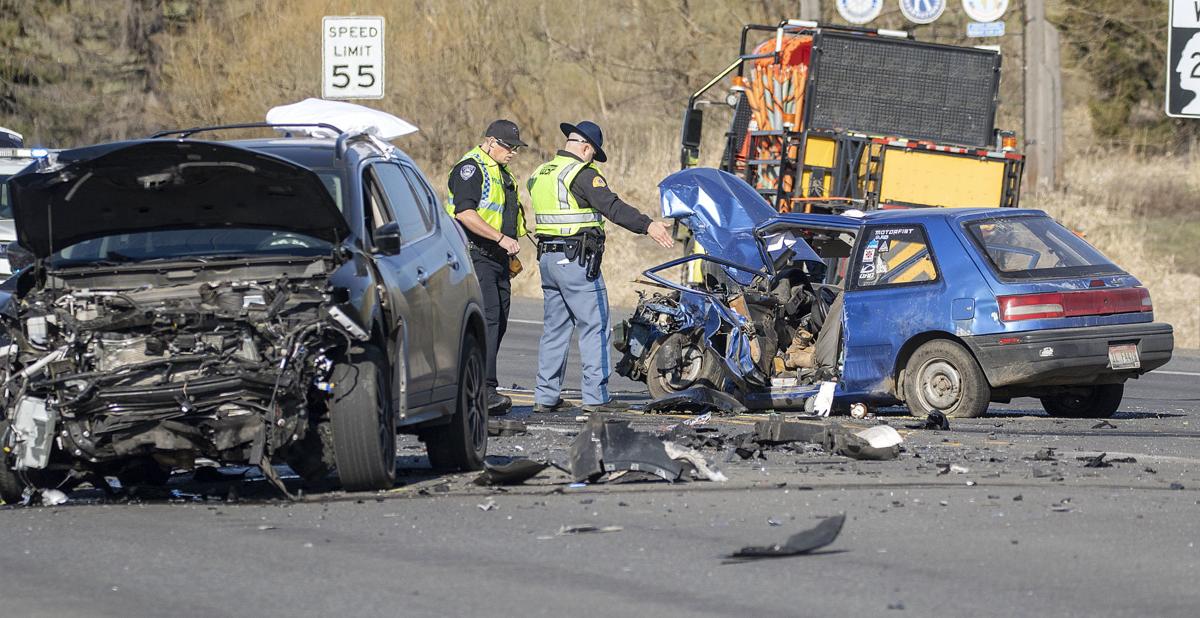
Just yesterday, it was reported that Jack Hurley, 88, was killed at the scene in Lewiston after being struck by a vehicle. This followed a crash in Lewiston which had occurred only a few days before, as well as a two-car collision which took the life of Timothy Calene right outside of Pullman in the beginning of April. 

It is clear that one thing is true in this time: our safety is still a significant priority that we need to be continuing to pushing for ourselves and the ones around us. 

This is the purpose of Distracted Driving Awareness Month.
Erica Forney, at age 9, was tragically killed by a distraced driver in 2008.

SAFETY HAS ALWAYS BEEN FIRST.

Distracted Driving Awareness Month was first established by the U.S. Congress in 2010 with the help of Shelley Forney. 

Forney started advocating back in 2008 - in the rapid rise of cell phones - when her 9-year-old daughter was killed by a distracted driver on Thanksgiving of that year. Her efforts went on went on in 2010 to dedicate April as Distracted Driving Awareness Month in 2010.

Throughout the years following, the movement has grown nation-wide, and agencies across the country have banded together every April to help remind our communities that there is NO SUCH THING as a small distraction when it comes to driving and that our attention (or lack thereof) on the road can have serious consequences.

WHERE ARE WE NOW?

Preventing distracted driving is an uphill battle. The death rate from car collisions in Washington State consistently reached around 500 deaths yearly from 2015-2018. On a nation wide scale, over the last decade, there has been a significant increase distracted-driving-related crashes. The number of deaths related to distracted driving jumped from 3166 in 2017 to 4637 in 2018. 

However, thanks to the hard work of agencies throughout the country, as well as individuals using self-discipline and taking responsibility out on the roads, there is hope for the elimination of crashes and deaths from distracted driving.

TAKE THE PLEDGE.

If you haven't take the pledge to drive safe TODAY. Your responsibility on the road can make a massive impact on those around you. Don't take it lightly.

Stay safe out there everyone.

Tuesday, April 21, 2020

Don't Do It Alone! - Education At Home (for Students & Parents)


Within the span of a few days, homeschooling became the new norm.

WSU Assistant Professor Elizabeth Weybright gave some helpful insight from her research on leisure and boredom. She has been tracking boredom complaints on the Internet since stay-at-home orders were given. A WSU News article concludes with a quote from Weybright.

“The situation we are in is unprecedented,” Weybright said. “None of us were given any skills in dealing with a pandemic as individuals or as parents. We’re all struggling and acknowledging that is important.”


In this time, there is no denying that we are stuck and are unsure what to do. One of the particularly pressing issues is the rapid transition to education at home. Keep reading to learn what you can be doing, whether you're a student or a parent, to tackle the new reality of isolated, online schooling.


IF YOU ARE A STUDENT. . .
You're almost at the end of the school year! No doubt you have had a lot of changes in your schedules and are still trying to figure out how to use this time. The New York Times recently released an article detailing students' reactions to the new era of "social distancing." Many responses highlighted the difficulty to use the new time and even the occasional "existential contemplation."

Here are two things to remember while you are at home.

STAY SOCIAL.
Your peers are an important part of this time of your life, so it is important to be in touch with them when you can. Find any sort of opportunities you can to be in face-to-face interaction with each other and to do things together remotely. Continue to meet over video with your classmates for projects, assignments, etc. Also, it is very beneficial to those you are connected to when you send messages of positive reinforcement every now and then.

STAY APART (AND ENCOURAGE OTHERS TO DO THE SAME).
As strange as it sounds, the best thing you can do for your peers right now is to be away from them. Our priority is protecting those around us in any way we can, and we need to make sure we are all have this same goal and are doing whatever it takes to stay clean (for the thousandth time, thank you for washing your hands!) and away from those who are at high risk. Be sure to encourage others to adopt healthy habits if they haven't already. Remember - we are protecting each other by doing this!


IF YOU ARE A HOMESCHOOL PARENT. . .
[Personal preface. I was homeschooled for 12 straight years, and I saw my mom endure the constant work of teaching her kids of various ages, find new academic resources to help us learn in the best possible way, and coordinate with other homeschooling families in co-ops or online courses. Looking back, I realize how hard this was on her and how she did not do it perfectly, but I am extremely grateful for all the ways she helped me excel academically and creatively.]

If you're currently intimidated by the task or unsure of how to go about it, know that your kids are going to really appreciate and benefit from your direction as their new stay-at-home teacher. The responsibility is huge, but there are helping hands out there to give you a boost. Don't do this alone!Here are some useful, FREE resources you can use in your home to help your child's learning.

Khan Academy (All ages)
ActivEd Walkabouts (PreK - 2nd Grade)
Easy Peasy All-in-One Homeschool (K - 12th)
Ambleside Online (K - 12th)
Newsela (All Ages)
Virtual Field Trips and World Tours (TripSavvy)
Scholastic Learn at Home (PreK - 9th)
Smithsonian Learning Lab (All Ages)
Funbrain (PreK - 8th)
Storyline 
Big History Project 
Chrome Music Lab 
Club SciKidz 
GoNoodle (PreK - 1st)
Bedtime Math 
Code.org 
YouTube 
826 Digital (1st -12th)
Starfall (PreK - 3rd)


AS ALWAYS, HANG IN THERE!
One of the biggest struggles for surely all of us in this time is having the motivation to finish this school year strong, whether you're a student or a homeschool parent. Nevertheless, if all of us are working together to fulfill the responsibilities in front of us, the results will definitely be rewarding. As Weybright plainly stated, we are all struggling, and there is nothing wrong with acknowledging that to one another. Let's help each other in this time!

Booze & Boating Never Mix

 Booze & Boating Never Mix Summer is here! With Father's Day this weekend and the Fourth of July right around the corner, it is more...